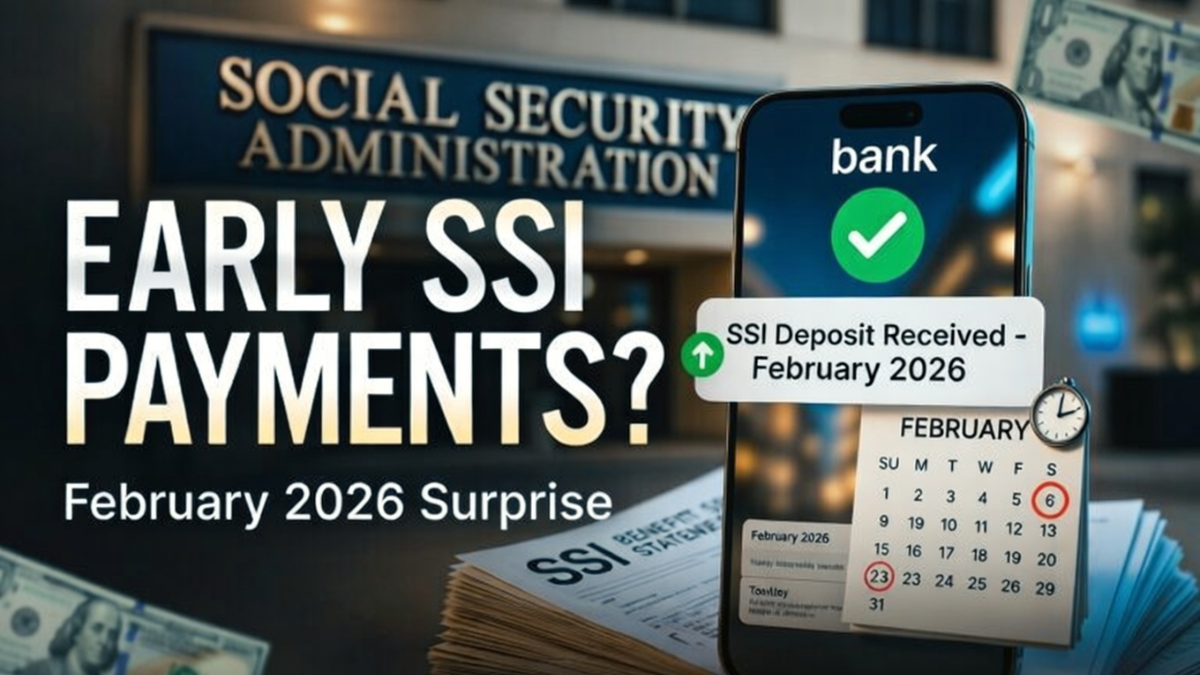
In February 2026, many Supplemental Security Income recipients were surprised to see their payments arrive earlier than usual. The unexpected timing led to confusion and questions about whether an extra payment had been issued or if new benefit rules had quietly taken effect. For people who depend on SSI to cover rent, food, and medical needs, even small changes in timing can feel alarming. However, the reason behind the early payment is simple and follows long-standing rules.
The Calendar Rule Behind Early SSI Payments
SSI payments are normally sent on the first day of each month. When the first falls on a weekend or a federal holiday, the Social Security Administration releases the payment on the previous business day. This rule exists to make sure beneficiaries do not experience delays when banks or government offices are closed.
In February 2026, the first day of the month landed on a non-business day. Because of this, SSI payments were sent earlier than usual. This calendar shift made it feel like something unexpected had happened, even though the payment followed normal scheduling guidelines.

No Extra or Bonus SSI Payment Issued
Despite the early arrival, there was no extra SSI payment in February 2026. Beneficiaries received their regular monthly benefit amount, just delivered ahead of schedule. The total SSI income for the year did not increase, and there was no special bonus or additional assistance included.
This type of early payment happens several times over the years whenever the calendar creates a conflict. It is a routine adjustment and not a sign of policy changes or emergency decisions.
Why Early Payments Can Feel Confusing
Early SSI deposits often create confusion because the payment shows up sooner than expected, sometimes before the previous month feels finished. This can make it seem like an additional payment, especially for people who closely track their deposit dates.
यह भी पढ़े:
 How Fast Is the IRS Paying 2026 Tax Refunds? Timeline and Tracking Guide | IRS Refund 2026
However, the next SSI payment will still follow the normal monthly schedule. That means there may be a longer gap before the following deposit arrives, which can catch people off guard if they are not prepared.
Budgeting After an Early Payment
When SSI payments arrive early, it is important to remember that the money is meant to last for the entire month. Spending it too quickly can lead to financial stress later on. Planning expenses carefully helps ensure stability until the next scheduled payment.
The early payment does not affect SSI eligibility, reporting rules, or benefit amounts. Beneficiaries do not need to report the early deposit because it is treated as a normal monthly payment.

When to Contact Social Security
If an SSI payment does not appear on the expected date, beneficiaries should allow at least one business day for bank processing. If the payment is still missing after that time, contacting Social Security directly is the safest option.
Final Thoughts
The early SSI payments in February 2026 were caused by routine calendar rules, not a new benefit or extra payment. Understanding how the SSI payment schedule works helps avoid confusion, supports better budgeting, and protects beneficiaries from misinformation.
Disclaimer
This article is for informational purposes only and does not provide legal or financial advice. SSI payment rules and schedules are set by federal guidelines and may change. Beneficiaries should contact Social Security or visit official government resources for the most accurate and up-to-date information.