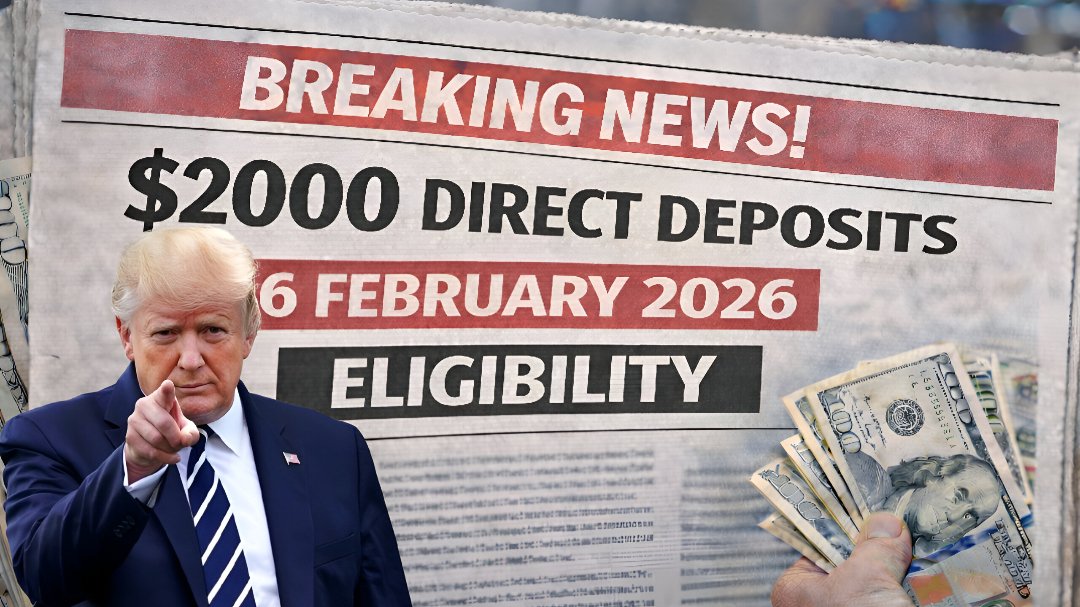
As February 2026 approaches, millions of Americans are paying close attention to reports about a possible $2,000 direct deposit beginning around February 6. With the cost of rent, groceries, healthcare, and utilities continuing to strain household budgets, the idea of additional federal financial support has naturally drawn strong interest. Many families are eager to understand whether this payment is real, who it could help, and how it might be delivered.
What the Proposed $2,000 Payment Is Meant to Do
The discussed $2,000 payment is being described as short-term financial relief rather than a traditional stimulus check. The goal is to help eligible individuals manage essential expenses during a period of ongoing financial pressure. Unlike loans or tax credits, this payment would be a one-time benefit that does not need to be repaid. If approved, the IRS would be responsible for distributing the funds using information it already has on file.
Current Status of the Payment Plan
At this time, the $2,000 direct deposit has not been officially approved or finalized. The proposal is still part of early policy discussions and depends on formal government authorization. Without final approval, no payment schedule is guaranteed. Any mention of a specific start date, including February 6, should be treated as tentative until confirmed by official federal announcements.

Who Could Qualify If Approved
Eligibility discussions suggest income-based guidelines similar to earlier federal relief efforts. Low- and middle-income households would likely be prioritized, including working taxpayers, retirees, and low-income beneficiaries. Payments could gradually decrease for higher earners and phase out entirely beyond certain income levels. Final eligibility rules would only be known once legislation is passed and official guidance is released.
How Payments Would Likely Be Sent
If the plan moves forward, the IRS would use existing systems to deliver funds. Direct deposit would be the fastest option for those with bank details already on file. Others could receive paper checks by mail, which usually take longer to arrive. In some cases, prepaid debit cards could also be used. No application would be required if records are up to date.
Steps to Stay Prepared and Informed
While no action is required right now, individuals can prepare by ensuring their banking and address information is current with the IRS. Filing recent tax returns accurately also helps avoid delays if any payment is approved. It is important to remember that the IRS does not request personal information through phone calls, texts, or emails.

What to Expect Going Forward
An extra $2,000 could help many households cover urgent needs such as rent, food, medical bills, or transportation costs. It could also support local economies as people spend on essentials. However, until official confirmation is issued, expectations should remain cautious and grounded in verified information.
Disclaimer
This article is for informational purposes only and does not provide financial, legal, or tax advice. As of now, the $2,000 direct deposit discussed for February 2026 has not been officially approved. Payment amounts, eligibility, and timelines depend on government decisions and may change. Readers should rely on official IRS and government sources for the most accurate and up-to-date information.